
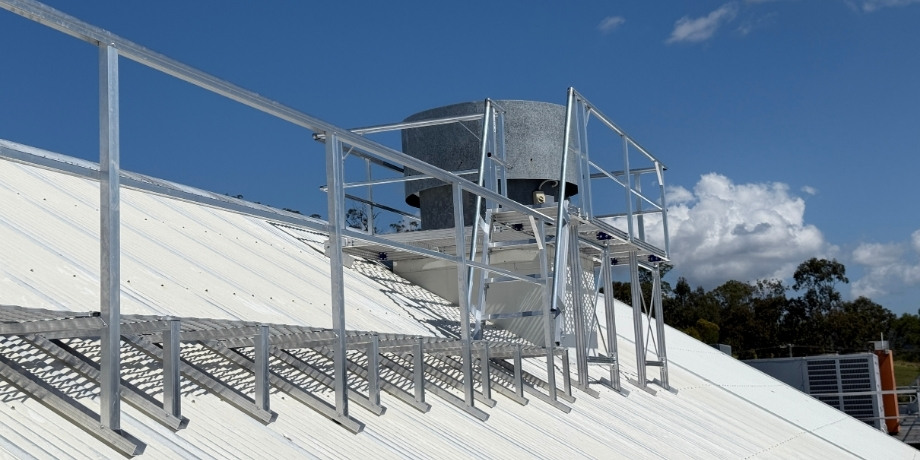
Why safe roof plant access is a legal duty – and the five steps every PCBU, building owner and/or facility manager needs to take in order to meet their responsibilities
PCBUs – safe roof plant access is not optional, it’s a legal duty
Accessing and navigating a rooftop in order to maintain or repair roof plant is an inherently risky activity. That’s why the party(s) commissioning this activity – the PCBU, building owner and/or facility manager – carries clear legal responsibilities under Work Health & Safety legislation (note Queensland example below, but always consult legislation relevant to your State or Territory).
| Primary Duty of Care: Queensland Work Health & Safety Act 2011, Section 19 PCBUs must ensure, so far as reasonably practicable, the health and safety of all workers | Safe Entry & Exit: Queensland Work Health & Safety Act 2011, Section 20 PCBUs must ensure, so far as reasonably practicable, that the means of entering and exiting the workplace are without risks |
| Preventing Falls: Queensland Work Health & Safety Regulation 2011, Part 4.4 PCBUs must ensure, so far as reasonably practicable, that fall risks are eliminated or minimised | Duty to Consult: Queensland Work Health & Safety Act 2011, clause 46 PCBUs must consult, so far as reasonably practicable, with other duty holder(s) relevant to the matter at hand |
Failure to meet this duty could expose PCBUs, building owners and/or facility managers to legal liability (see Australia’s workplace manslaughter laws) should the worst happen and a worker or external contractor be injured or killed onsite.
Five things every PCBU must do to ensure safe roof plant access
1. Conduct a roof plant access risk assessment
Identify any potential slip or trip hazards and fall-through or fall-from-height risks. These could be associated with accessing the roof, paths of travel across the roof, the roof plant location, the roof structure itself and/or the work area or worker activities required.
2. Ensure safe roof plant access infrastructure is installed
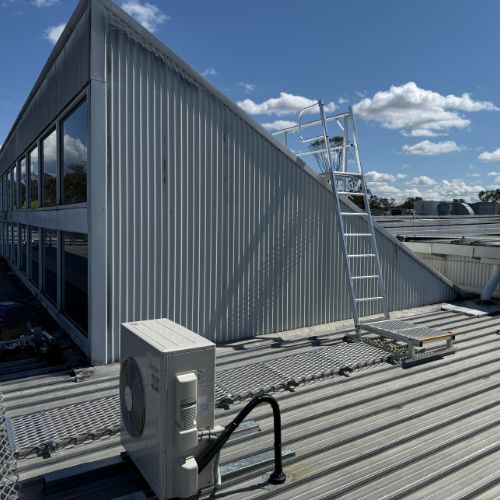
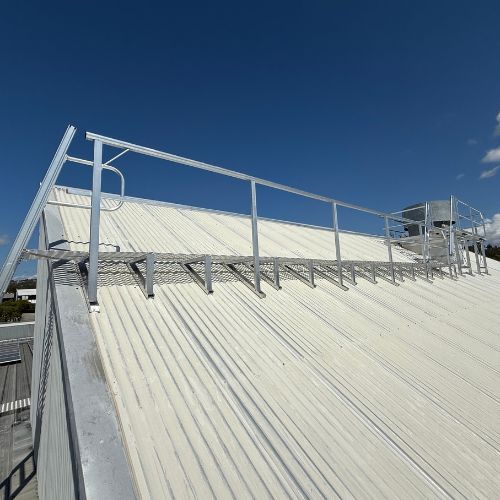
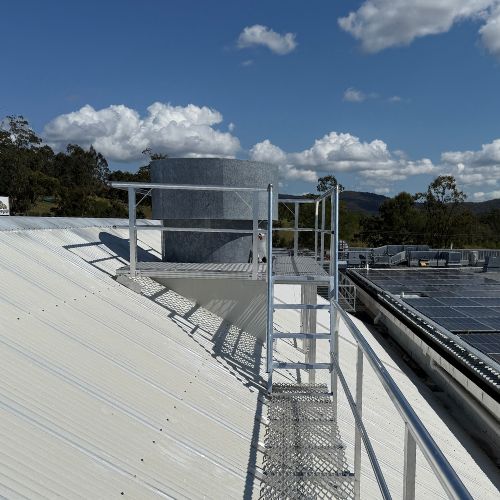
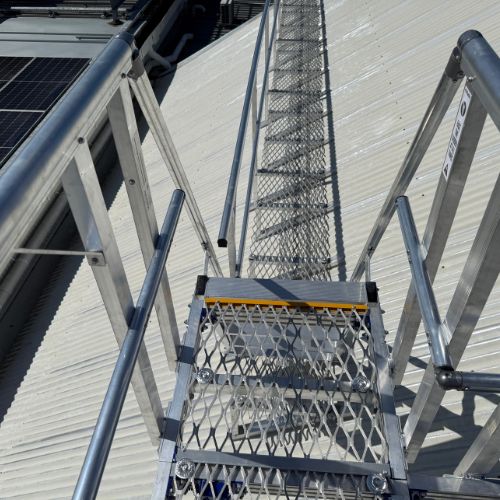
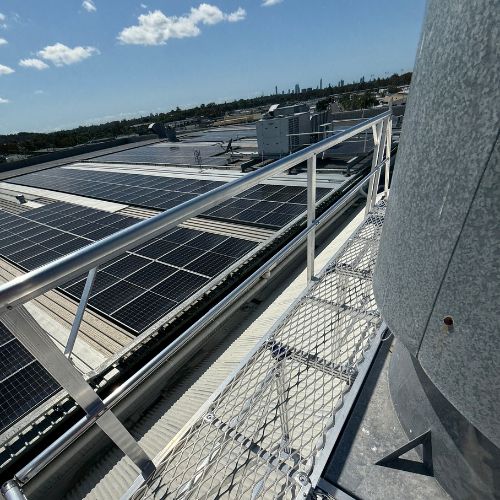
A safe roof plant access system should then be designed and infrastructure installed in order to eliminate and/or sufficiently mitigate issues identified in the risk assessment. Whilst every site (and therefore system) is unique, most will incorporate many of the following components:
- A fixed external or internal roof access ladder or stairway
- A roof access hatch with guardrails (if access is internal)
- Edge protection guardrails where required
- Rooftop walkways (with handrails as needed)
- Permanent anchor points and/or static lines
- Cross-over bridges to navigate obstacles, fragile surfaces, roof levels
- Roof plant platforms and/or stands
3. Maintain safe and compliant roof plant access systems
Regular inspection and maintenance of your roof plant access system – each component and the system as a whole – is required in order for its continued safety to be assured. In addition, check your installation documentation to ensure you meet any compliance re-certification requirements.
4. Develop, document and train workers in safe work procedures
PBCUs must ensure all roof plant access risks, their mitigating control measures, corresponding safe work practices and emergency procedures are well documented (typically in a Safe Work Method Statement). Everyone accessing the roof and roof plant must be suitably informed of these, with training provided as needed.
5. Co-ordinate with other duty holders to ensure and maintain safe roof plant access
PCBUs must consult with other duty holders to ensure safe access remains in place at all stages of the roof plant’s lifecycle. Consultation may extend to contractors, tenants, designers, installers and more.
> Download your Safe Roof Plant Access Checklist for PCBUs here
Investing in safe roof plant access is good for PCBUs too
Investing in a fit-for-purpose roof plant access system creates a work-at-height environment that is both safer and more work-efficient. You no longer have to hire specialist equipment or personnel every time you need to access the roof for inspections, repairs or maintenance – saving both time and money. This efficiency is likely in turn to support more frequent maintenance of (often multiple) roof plant assets – ultimately increasing their longevity. And finally, by keeping roof plant workers on the system’s walkways and platforms, your roof will be subject to less wear, tear and damage – thereby protecting your building asset.